

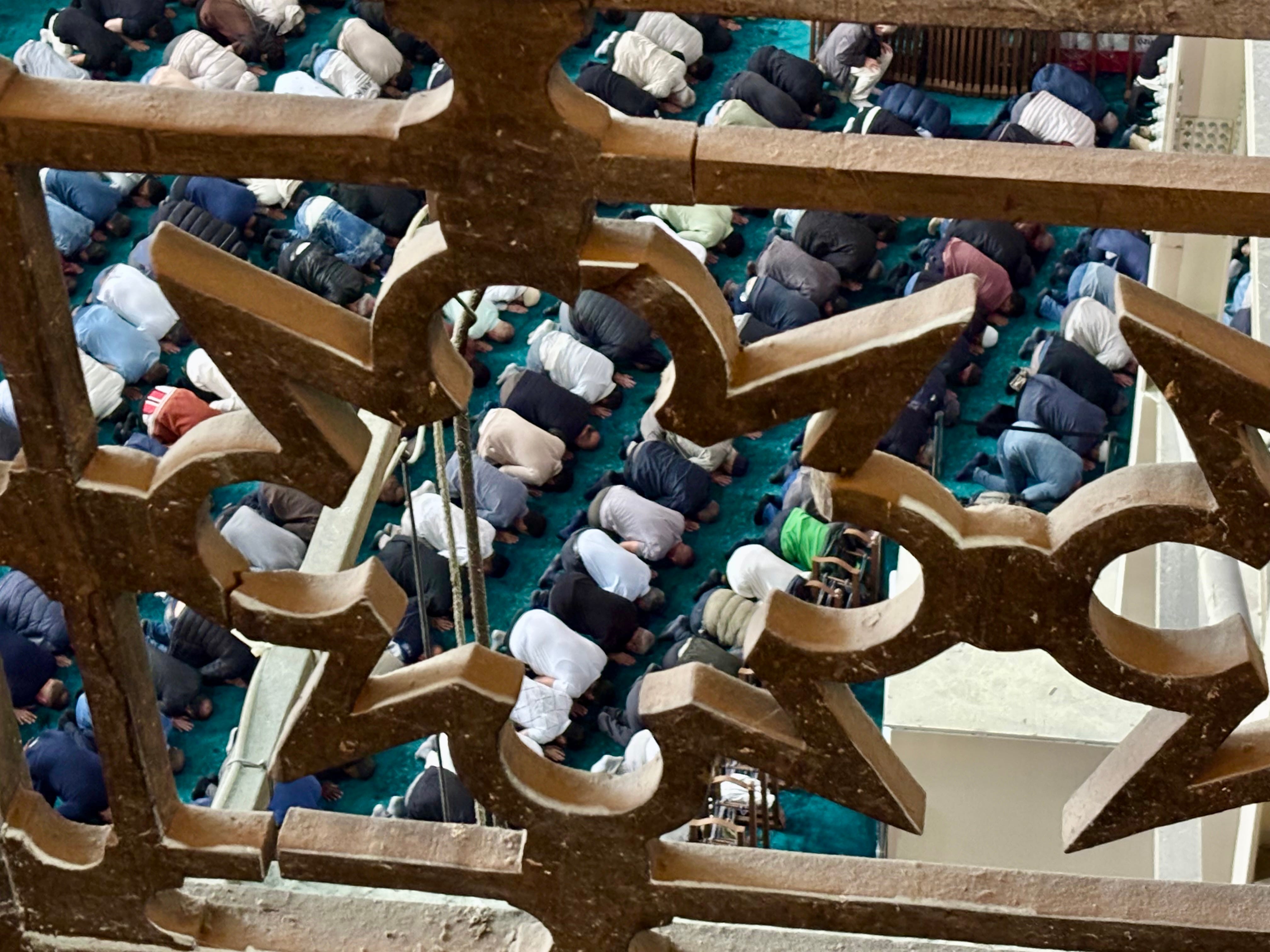
Today, I’m writing from Istanbul, the last great fortress of the Turks in Europe.
I’m sure you think you know what Istanbul is like. The city has winding streets and crumbling houses with terracotta roofs, and well-fed street cats slinking around the alleyways, and soaring minarets where they do exotic oriental wailing every sunset. But that’s not the real Istanbul. If it does exist, which to be honest is something I’m less and less sure about, all that stuff is just for tourists. The real Istanbul is a series of tunnels.
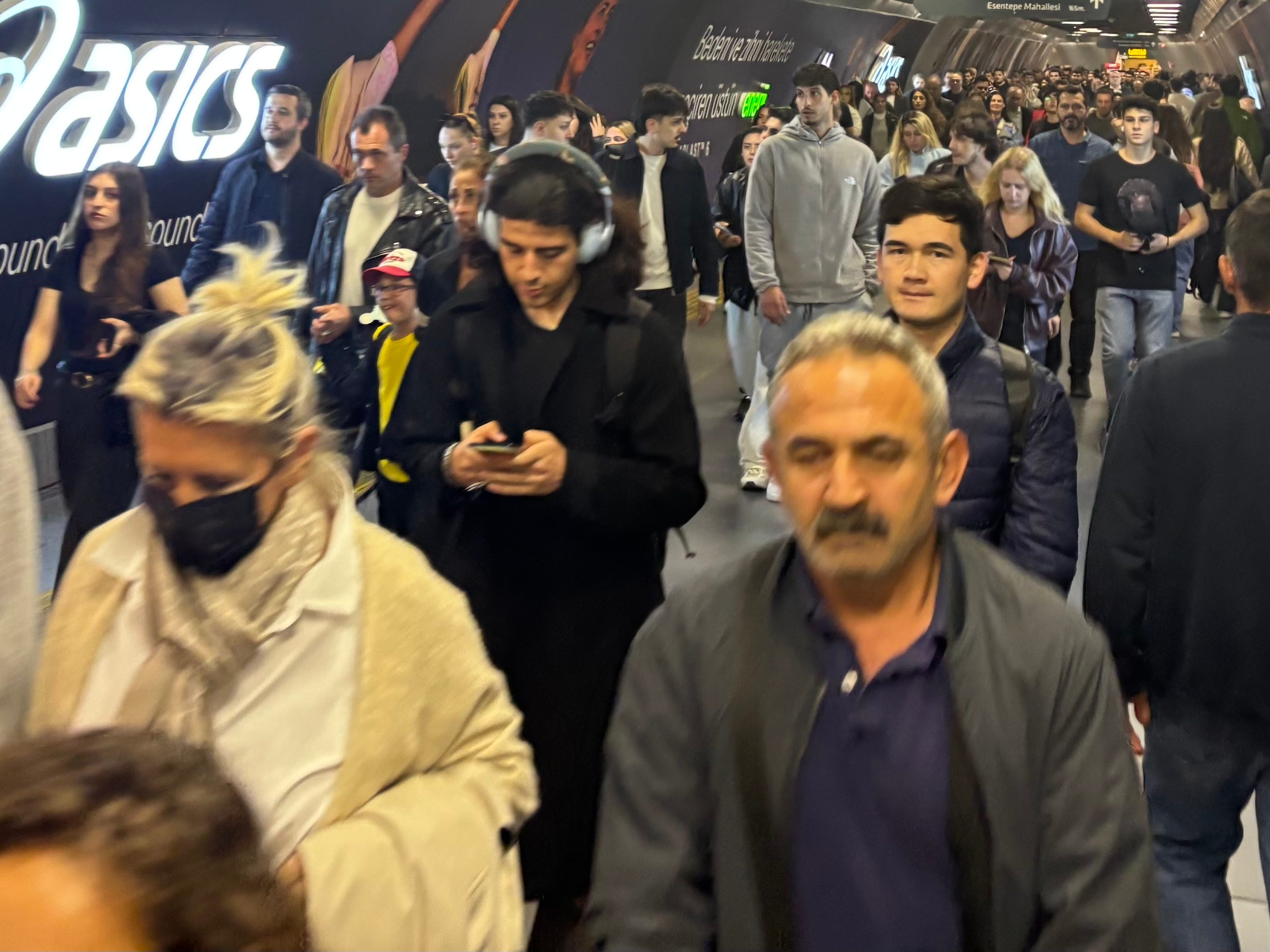
I discovered this on my first day here. Flew into the enormous new international airport, which is of course the nexus of the entire world, where the Euro-American order and its shadow briefly touch. If you live in a nice clean suburb somewhere, and for whatever reason you want to go to Somalia, or Yemen, or one of the resource-extraction zones where skinny ten-year-olds dig tungsten out the earth at gunpoint while rebel militia make protection charms out of human vertebrae, you will have to get a connecting flight through Istanbul. Ten years ago, a retired couple on a package trip to the Aegean and a wild-bearded maniac on his way to burn people alive for ISIS could bump into each other in the arrivals hall. That’s cosmopolitanism. Anyway, I flew into Istanbul Airport, and as we landed I wasn’t too concerned to see that the city out the window looked like a dense field of smokestacks and intake valves, antenna masts, windowless concrete cubes. Industrial zone, surely. Near the airport. Stands to reason. So I took the metro into town, and when I reached my stop I followed the signs for the exit, but there was no exit. An underpass, which led to a passageway, which flowed into another underground tunnel, a sprawling maze of them, Gayrettepe and Şişhane and Karaköy, all absolutely crammed with cyberturks walking purposefully in both directions. Women in leather jackets and pointy eyeliner, men with sculpted beards puffing on elaborate vapes, and the niqabis, abstract shapes, futuristically faceless. Sometimes the passageways were concrete, utilitarian; other times there seemed to be entire markets down there, shops and stalls, bunches of handbags, rows of Nikes, great banks of cooler cabinets filled with ayran and Coke. The only people not shuffling silently through this maze of tunnels were Syrian refugees. One stood on every corner with kids crawling about her skirts, ululating in tearful Arabic as she proffered a paper cup to the Turks marching indifferently past. They, too, seemed lost in here.
The mistake I made, that first day, was thinking that all these passageways would have to lead, at some point, to the sunlit world. I was still trying to find the exit. Every time I darted around a corner to find an escalator or a staircase, I practically leapt up the stairs, fully expecting it to open up into some kind of piazza surrounded by ornamented mosques. I was so certain that this was up, just because it was above my head. Sometimes when people are buried alive in an avalanche they don’t realise they’ve been turned upside down; they start digging themselves deeper into the snow. I was doing the same thing. It took maybe ten hours before I stopped stomping desperately for an exit and had the idea of staying still for a moment trying to notice where I was. When it was time for isha prayers, I observed that some of the people I took for commuters started walking through doorways into brightly lit, carpeted rooms. In the bigger underground shopping malls, there’d be glass doors leading to foyers, and people in suits slouching out. And occasionally, where two passages intersected, I’d find myself in a kind of high-domed atrium, with balconies around the roof, and strangers sitting up there, smoking and tapping on their phones, looking totally at home, because they were. I was already in the place I was searching for. This network of tunnels was Istanbul.
I’ve been here for two days now. I’ve enjoyed my time in the city. Maybe there really is a way out from the underground world, but I don’t need it. My hotel is nice, even if all the windows look out into a lightless concrete pit. The restaurants are great. It’s been fun observing all the foreigners who’ve come here for a hair transplant, trying to casually walk the tunnels with bandaged heads or bright-red scalps. I like the history too. Once you know what you’re looking for you can follow a passageway into the past, chrome to concrete to tile to brick, until the ceilings become high and vaulted and you find yourself in a seventeenth-century bazaar, being hassled by merchants with identical piles of spices and souvenirs. There are cavernous mosques down in the underground city, and sometimes, if you catch the right angle, you can take a service exit out of a luxury mall and find yourself alone in one of the hundreds of Byzantine cisterns, a huge cool column-lined space, silent except for the lapping of the waters. Or you might find, buried beneath the Istanbul where Erdoğan smiles from billboards, a thousand-year-old underpass with mosaics of Constantine and Theodosius on the walls.
I’m here because Numb at the Lodge is once again on holiday. Tomorrow I’m leaving the underground city and flying to Kazakhstan; for the next few weeks, paid subscribers can join us on a brain-melting tourist odyssey across the past and future of Central Asias real and imagined. I will be following a hidden thread across the mountains and steppes of the great centre of the world. But I’m starting here. Firstly, because if you’re going to some of the stranger parts of the world, you need to transfer via Istanbul. And secondly, because I will be travelling into the deep homeland of the Turks. In a way, Istanbul is the centre of the Turkic world, home to more people than the whole of Turkmenistan and Kyrgyzstan combined. But it’s also the city on their furthest western frontier, where the lands of the Turks and Europe still overlap.
For most of history, though, Europe has been a minor appendage of the steppe. Five thousand years ago, the continent was inhabited by peasant farmers. From sites like Vaihingen an der Enz in Germany we know they lived in wattle and daub houses very similar to the ones people used in the middle ages, four and a half thousand years later. Their ploughs were simpler and their crops more archaic but their lives were still more or less the same as basically everyone’s lives right up until the middle of the twentieth century. They must have thought they were on the long smooth slope down to modernity. Pile up enough grain in your globular earthenware amphorae and eventually it’ll turn into an airport. History had other plans. Suddenly, a new people poured out of the eastern steppe, but maybe people is the wrong word. Savage creatures, stinking of animals, grunting like animals, each of them half-hidden in a haze of fleas, but they could do something no one else had ever seen before. They were sitting on the backs of horses, moving across the world at the speed of a herd of charging horses, and suddenly the huge heavy world dissolved into pure speed, lines of motion, and within a few generations all the static farming societies as far as the Atlantic were wiped out. Those half-animal creatures were, most likely, your grandparents. Their bestial language is the earliest ancestor of English.
This has been the pattern of world history until yesterday, and maybe we’re just in a brief remission until it happens again. Every so often, the vast grasslands of Eurasia convulse with great armies, surging out into the coastal peripheries to conquer and destroy. It happened in the eleventh century, as the Oghuz Turks migrated from the shores of the Aral Sea to the gates of Europe. An Armenian chronicle described their arrival: ‘The death-breathing dragon appeared, accompanied by a destroying fire.’ The result is that, in 2026, the adhan sounds five times a day through the tunnels that were once the capital of the Roman Empire. But it’s strange that Istanbul has turned out the way it has. Over the course of history, the Turkic peoples have adopted every religion there is: the great steppe has seen Buddhist and Jewish and Hindu empires, khagans riding into battle for the doctrine that Jesus Christ had two natures in two persons, but in their ancestral religion the Turks worshipped Tengri, the god of the pure blue sky, imagined as a white goose that beats its wings endlessly over the steppe, creating the world beneath it as it flies. So how did they end up here, in the mole-people metropolis, living underground, and dutifully fixing the receding hairlines of the world?
The fun thing about this question is that Turkey is one of those countries that has chosen to fabricate its own early history.