

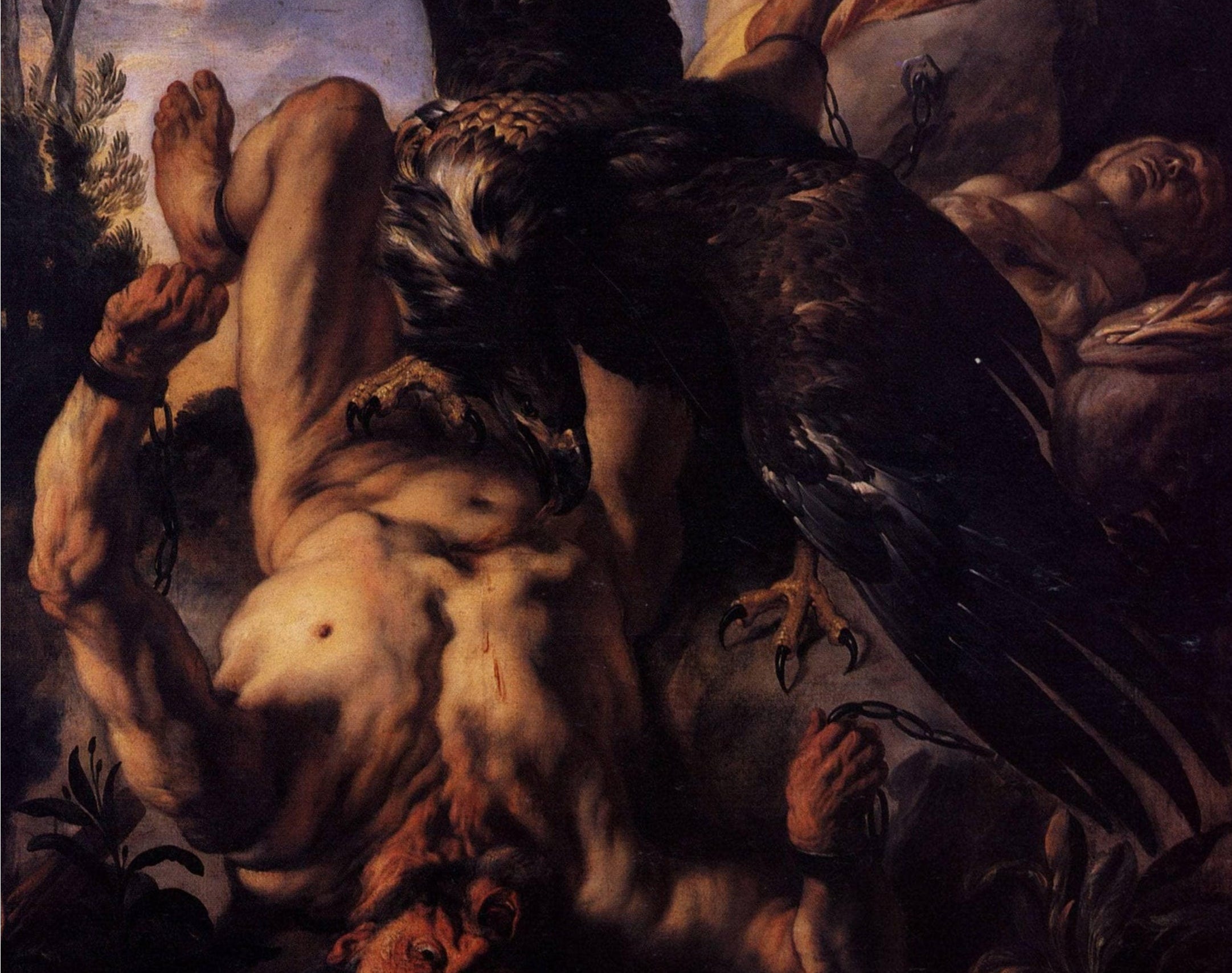
It’ll probably never happen to you. Maybe I should pretend it will: try to grab you by the self-interest and say, look, consider that this weapon you’re playing around with might one day be pointed at you—but it won’t. You will never be Ardayed. You will never have to sit helplessly while your entire life is systematically disassembled in front of you. You will never be on the front page of every newspaper in the country. There will never be huge crowds delightedly rummaging around in your entrails, the chirp and titter of a million sparrows pecking at the flesh of a dead elephant: you’re safe from all that. Not because you’re innocent. You’re every bit as guilty as he is. Nobody makes it through life without swaddling themselves in a thick coating of lies. You lie about yourself so often and so automatically that you almost start to believe it. The only difference is that when Jason Arday lied he went big. Huge, rough-hewn, monumental fictions, like ‘I couldn’t read or write until I was 18’ and ‘I ran nine marathons with a broken leg’ and ‘I had a brain tumour removed two weeks before my viva and had to relearn everything I’d written in my dissertation’ and ‘a mysterious South American shaman woman prophesied that I was destined for great deeds.’ You don’t lie like that. All your delusions are tiny, minuscule things. ‘I’m a good person.’ ‘I am satisfactory in bed.’ ‘The people who dislike me are just jealous.’ It takes a greatness of soul to build fabulations the way Jason Arday did. You need a Promethean spirit to decide to create yourself again out of nothing, and real courage to bet your entire being on lies that can so easily be disproven. But you are small and cowardly and you will spend all your life scurrying around in the undergrowth of the world, never poking out your head to look at the sky, and the thing that happened to Professor Jason Arday will never, ever happen to you.
Of course, everything the carrion-eaters said about Arday was true. Since his death, some of the people who think they’re on his side have tried to rewrite history. He was really just an ordinary academic, hounded to death by the right-wing media, because they couldn’t accept that a black man might deserve a professorship at Cambridge. Or, in the more condescending version, he was the hapless victim of all the smug white liberals, who kept promoting him way above his abilities to burnish their diversity quotas. No: this is an insult. He was brilliant at what he did. He blagged his way through the world with nothing but brio and good looks. One of the great British chancers, a wide boy from a council estate who managed to insinuate himself into one of the most prestigious universities in the world. He conned them all; all it took was some South London street smarts and he had them eating right out of his hand. He could ramble about Australian soap operas and convince everyone they were listening to a genius. They were! But now, in death, you want to shrink him down again. Domesticate him, turn him into another passive victim, distinguished by nothing more than the colour of his skin.
It’s also completely true that the press had every right to report on this. It’s news. Cambridge is a major institution, it takes government grants, it represents the country; of course we have a right to know if it’s giving out professorships to lovable rogues with a totally invented backstory. Arday was advising the government on the school curriculum; people in that kind of position need to be held to public scrutiny. But is that really all you were doing? Admit it: you were having fun. Everyone was enjoying it. Peer into the man’s house, infrared cameras, concrete-penetrating LIDAR, let’s see what’s in his sock drawer: socks. I knew it. Every day there was another piece of insane and compelling Arday news. He’d claimed he was on a TV show that aired decades before he was born. He’d claimed he was threatened in his office by a masked knifeman who was mysteriously invisible to CCTV. There’s a big interview in the Times. There’s new revelations in the Guardian. His autobiography’s about to come out, big celebratory moment, major publisher, pinnacle of his career, champagne at the book launch, but look, looklooklook the Atlantic has an advance copy and they just ripped it to shreds, and isn’t it fun? There’s a guy on TikTok who says he went to school with him and all that stuff about him being nonverbal until the age of eleven is fake. ‘The bredda was chatting, yeah? The bredda was chatting.’ We’ve built this reverse panopticon where the gaze of a hundred million people converges on a single point, and it turns out all those concentrated eyeballs have the force of a ten-kilowatt laser, they start stripping off the skin, they peel a man like an orange. Put anyone you like in the machine and turn it on—vicar, imam, sweet old widower tearing up bread for the ducks with his trembling hands—and before long you will discover something that retroactively justifies putting them in the machine. But it will never be you. You get to watch as today’s subject is slowly ground down to a nub, a thin film of dust covering the bright clean mirrored room, and didn’t we see some crazy stuff inside that guy when we opened him up? Wasn’t that cool?
In my weaker moments, I got swept up in it too. Maybe it’s worse that I was obsessively following the Arday news with the permanent pained expression of someone who’s doing something bad but also feeling bad about it, as if that somehow makes up for things. ‘I really hope he’s holding up ok,’ I’d say, while flicking from one news story to the next. But the longer it went on, the more powerful the bad taste in my mouth started to get. The Daily Mail quoted some of his frantic excuses, and then reported that ‘he asked that we attribute the quotes to ‘a source close to Professor Arday.’’ Cue much hooting, and I suppose it does sound nuts if you don’t know, but the British press has a longstanding tradition where a public figure can choose to speak their mind freely and be quoted as a ‘friend of’ or a ‘source close to’ themselves. If you ever read something like ‘a friend of the beleaguered minister said that ‘she’s doing her best and everyone needs to fuck off and leave her alone,’’ you can be pretty sure those words are from the minister herself. The journo gets a nice unfiltered quote, the source gets to keep some dignity, everyone wins. But they didn’t extend this courtesy to Arday. Instead, they published the fact that he’d asked for it. You could break trust with the man; it didn’t matter. No need to play nice, keep him on as a potential source; they knew they were going in for the kill, and when it was done there would be no more need for any further quotes from Professor Jason Arday.
If a lot of people seem to have suddenly started making very different noises in the last few days, it’s not because any of the substance has changed. Everything they said is still true. The allegations against Arday are the same, and the evidence is still overwhelming. The only difference is that it’s not fun any more. The victim can’t run or hide, but if they’re desperate and vicious enough they can choose to ruin the fun. You destroy yourself in the process, brutalise your family and everyone who ever loved you—but for all the people in the great giggling mob, it’s like a bucket of ice water to the face. Suddenly they all stop hooting and honking and sticking out their tongues. A few blinks. Sober, sheepish expression, as it dawns on them that they appear to have just been torturing a man to death for their own sick amusement. Ah. Well, in this particular case it looks like the evidence might have actually been overblown. What a tragedy. What a senseless waste. Ideologically motivated, obviously. Wouldn’t have happened if he were white. We should think about introducing more controls on the press. We should make it mandatory to be nice. But it never lasts very long. You’re not really sorry, just momentarily embarrassed. A few weeks later someone else is being paraded for your amusement, and you’re whooping like a gibbon as their skin starts to fissure in the light.
Still, the mobbing of Jason Arday really was ideologically motivated. They were nasty people, the people after him: racists, pedants, lifeless caliper-wielding bean-counting freaks who’ve abandoned the sensuous world for a field of mathematical group averages. Nathan Cofnas. Pale vole man. The spirit recoils. They weren’t really out to get Jason Arday; he was just their instrument, a crack in the surface of Big Woke they could pry open for political gain. He’d unknowingly turned himself into the perfect weapon for his enemies. A diversity hire whose work was uniformly bogus, but whenever anyone noticed he shut them up with accusations of racism. Their job was to turn this one man into a symbol of everything wrong with the whole of the twenty-first century. If you have any problems with racism, you’re complicit in academic fraud. And it worked, it worked amazingly well, until the man ruined it all by taking his own life. But now that he’s dead, Arday is once again incredibly politically useful, just to the other side. A crack in the surface of Big Anti-Woke. If you have any problems with the latest round of harebrained DEI schemes you’re complicit in the bullying that killed Jason Arday.
They’re no better. This game is suitable for all players. Right now, on the other side of the Atlantic, a lot of different people are upset for a lot of different reasons because AOC went on the news to say that ‘woke 1 was crazy.’ The issue was another DSA type called Francesca Hong, whose old tweets had resurfaced: she’d railed against Thanksgiving as a celebration of colonialism, ‘the original superspreader event that killed Indigenous folx and women.’ Back in 2020, this was a totally normal thing to say; now you sound like a maniac. The word folks is already gender-neutral. It does not need an x. But that’s not why woke 1 was crazy. Shit, she wasn’t wrong. Europeans came to the Americas and more or less everyone living there died. The extermination of an entire hemisphere. It was horrible, and maybe it’s bad taste to have your kids make finger paintings of smiling Pilgrims and smiling Indians sharing platters of bountiful maize. What made woke 1 crazy wasn’t the content of the beliefs but their social function, which was to let you feel good about doing the thing they just did to Jason Arday. Look, this minor celebrity chef has some old tweets where he spelled folks without the x, which is homophobic, and he shared a recipe for turkey in November, which is colonial, and now an ex-girlfriend is bravely speaking out, saying that their relationship ended badly and left her with a lot of hurt. Well, we’ve heard enough: this court finds you guilty of being unashamedly good at something while less than morally perfect, and sentences you to Whatever We Can Do To You. Let’s see if we can get all your friends to denounce you. Let’s see if we can have you turning hot dogs on the street. We’re standing up for justice and the oppressed. There was no mercy, back then, if you just threw up your hands and said hey, pre-woke was crazy. Some of the people who went through this process really had done bad things. Well, Jason Arday did bad things too: he convinced thousands of parents of nonverbal autisics that their children might one day grow up to be Cambridge professors. In any honest accounting, you could stand on the street screaming racial slurs for a decade and still not be crueller than that. But in the frenzy of punishment, none of that matters. As soon as being a good person just means constantly indulging your most sadistic impulses, we all have an urgent moral duty to stand with the bad.
That was woke 1. It’s over now; we’re in something else. Three years ago I tried to predict what the next thing would be. Maybe speeding; maybe we’d be cancelling each other for driving too fast. Don’t you know that kills people? But never in a million years would I have guessed that instead of racial microaggressions, one day we’d all be in a state of mandatory screeching hysteria about the academic code of conduct.
This is not to say that everything’s fine at the universities. It’s all fucked, massively and comprehensively fucked on a scale you can’t even comprehend. If only Cambridge had hired Arday because of the woke mind virus and PC gone mad. Then there would be a solution. Simply turn down the big dial marked REVERSE RACISM; job done. The actual problem is much vaster. Right now, the entire British university sector is kept afloat by roughly three quarters of a million international students. They’re here because Tsinghua is hard to get into and Cambridge isn’t, and we’re happy to have them. We’ll let them exist in an unofficial parallel system, where they get to take lectures in a language they barely understand and cheat on an industrial scale, because the last thing we want is to scare away the money. For the moment it works, bosses in Shenzhen are still impressed by an international degree. It won’t last forever. You can only debase the coinage so long before people start noticing; eventually the halls that nurtured Newton and Wittgenstein will rank alongside the Changchun Institute of Canned Food Technologies. But the domestic students are the same. Have you been in a university lecture theatre lately? Go: it’s fine, everyone’ll just assume you’re a particularly unfortunate-looking mature student. Sit at the back. At the far end of the room there’s a little person trying to talk about textuality, performance, and production; meanwhile the space in between is a glowing, rippling sea of laptop screens. Every single one of these students is scrolling through pictures of jumpsuits on Shein. When they need to submit an essay they get ChatGPT to print one out for them. And frankly, the academics aren’t any different themselves. Their main function is research: investigating the world, finding interesting new facts or startling new interpretations, and writing them down so other people can be interested and surprised by them too. And a lot of research does take place. A constant stream of high-quality world-leading papers, all duly rubber-stamped under the Research Excellence Framework, all of it totally meaningless dreck. In Arday’s field of education studies, something like fifty thousand papers are published every year. You could sit down every day from nine in the morning to nine at night and do nothing but read high-quality research in education studies, and it would take you eight years to get through a single year’s output. But these texts don’t exist to be read. They exist to drive research grants, so the department can produce even more texts for no one to read, more and more, filling every crevice with useless words.
It is genuinely deranged, in this situation, to start ginning up a moral panic over academic standards. We’re in November 1918 and you’re trying to have a Prussian infantryman whipped for not shining his boots. It’s over; the academy is a literate institution marooned in a postliterate world, governed and staffed by people who no longer have anything to do with whatever way of being these places were once built to protect. They’re all form-fillers, generating excellence in predictable increments. They don’t know how to read. Which is how an institution like Cambridge could hire a man like Jason Arday, who left a grammatical error in the title of his dissertation. Not because he was black, and not because of his purported disability, but because there was probably no one on the hiring committee who had actually bothered to read his work. Just check his citation numbers. Why not have a professor who, by his own account, takes an hour to read a single page of text? In a fully literate institution that would be disqualifying. Not everyone has to be an academic; it has nothing to do with your worth as a human being, but maybe, in light of your disability, this particular line of work isn’t for you. In the postliterate university it’s no impediment at all. Welcome; you’ll fit right in.
But I’m not saying Cambridge were wrong to hire him. Who else should have got the job? A serious, studious non-plagiarist? The kind of mental eunuch that’s genuinely committed to the practice of writing bullshit papers no one will ever read? Arday clearly deserved it more. For all the ways he was exactly the same as everyone else in academia, he was also unfathomably different. Imagine you’ve spent your life digging around in the airless burrows of some shabby third-tier department, when suddenly a person like Jason Arday appears. You’re in an institution that no longer really knows what it is or what it’s for, but here is the living embodiment of radical freedom, a man who invents his own history every day. You’re trying to massage a p-value into significance; he’s heroically overcoming every disease known to man. He must have seemed like a titanic, mythic, glowing figure, a hero out of a distant age. Arday’s enemies see a department willing to put its entire reputation on the line for this guy, and they assume that it must have all been cynical and condescending. That’s because his enemies are shrunken little creatures, incapable of understanding grandeur. Arday’s colleagues were clearly in awe of him. The world is full of illiterates, but only one of them became one of the youngest professors in Cambridge’s history. He did that. He was an Olympic torchbearer: he took up the flame that had been lit at the Temple of Hera in Olympia and carried it from Sutton to Merton. He edited the Today programme. For a while he was, genuinely, one of the most influential people in the country. Some of his achievements were real and some of them weren’t, but all of them were aimed at making this brief existence bigger and stranger and fuller with potential. He lived an extraordinary life, and he was made to suffer for it. He lacked the cold knot of fear and suspicion most of us carry: we know that everything conspicuous and vulnerable gets torn down in the end, and the best way to get along in life is to be as small and petty as everyone else. But he loved largeness. He loved it more than he feared the danger. He gave us a more richly embellished world, and he must have thought we might appreciate the gift. Look at what we did to him instead.