
The whispering ones
An epilogue

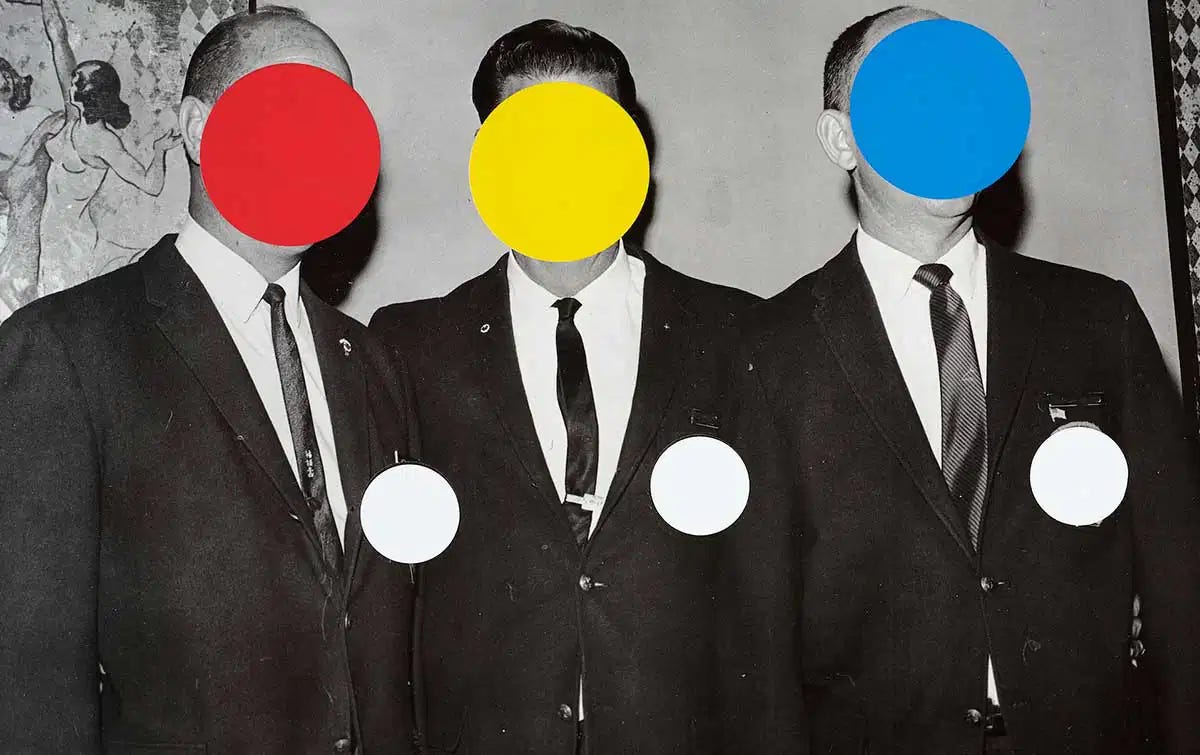
I’m in the new issue of The Point magazine, alongside contributions by the likes of Mary Gaitskill, Jessa Crispin, and David Bromwich. My essay is on the attempted assassination of Ronald Reagan in March 1981, and John Hinckley, the man who shot the President for reasons I think we still fail to properly understand today. The usual line is that he was trying to impress Jodie Foster, but it’s much bigger than that; in fact, I think what Hinckley did formed the model for the entire media and political environment we’re living in today. As I write, the future will probably remember John Hinckley among the inventors of whatever it is we currently call the internet. It’s called American Idols; go and read it. What follows is a kind of epilogue, or a footnote to the main essay. Because while it was John Hinckley that fired the gun at Reagan, there’s another man involved whose relation to the whole affair is much more mysterious: Reagan’s then-Vice President, George HW ‘Poppy’ Bush.
Bush was not in Washington when Reagan was shot; he was visiting Texas. In his absence, General Alexander Haig barged into a press conference and appeared to announce that he’d taken over the government. As I write in the essay, at the time ‘it might have looked a lot like the United States had finally gone through its first coup. Maybe Bush was being held in an underground cell in Texas; maybe he was in on it. He had some creepy connection to the man who’d just taken down Reagan. The shooter’s father was a family friend. They had the same lawyer. Bush’s son Neil was supposed to be having dinner with Hinckley’s brother Scott the very next evening. It all stank of conspiracy.’ In the end, Bush arrived in Washington that evening, around the same time Reagan regained consciousness in hospital, and the normal course of government continued. There was no crisis after all.
But there’s a problem with this official story, which is that it doesn’t make sense.
According to the alleged timeline, at the precise moment when Reagan was shot Bush was on board Air Force Two, flying between Fort Worth, where he’d just been attending a luncheon with the Southwest Cattle Raisers Association, and Austin, where he was due to address the Texas State Legislature. After being told about the shooting, he cancelled the rest of the day’s engagements. Air Force Two touched down Austin for a record-breakingly fast refuel before speeding at full throttle immediately to DC, where it arrived nearly five hours later. United will get you from Austin to Washington in three hours fifteen. The numbers do not add up. There is a gap of close to ninety minutes in which the Vice President’s movements are almost entirely unknown.
Thanks to testimony from an anonymous retired agent, we now know that contrary to the official timeline, when Reagan was shot Bush was not actually in the air. He was still on the ground in the Dallas-Fort Worth area. The Secret Service were frantically searching for him, with absolutely no success: somehow, the second most powerful person in the world had simply disappeared, as if he’d quietly sublimated into the air. He wasn’t seen again until he presented himself at the gates of Carswell AFB, behind the wheel of an unmarked Plymouth Reliant. He refused to tell anybody where he’d been, or how he’d got the car. (It was later taken to a military scrapyard and destroyed.)
One other thing. Bush’s first stop that day, before the cattle ranchers’ luncheon, was at the Texas Hotel in downtown Fort Worth. He was there to unveil a plaque, commemorating the fact that nearly twenty years ago, President John F Kennedy had spent his last night there before being assassinated.
You can only talk about Poppy Bush for so long before you have to start talking about the CIA. Officially, Bush was brought in as Director of Central Intelligence for just one year, January 1976 to 1977. In fact, he’d been CIA his entire life. He was CIA in 1963, when he just so happened to be in Dallas while Kennedy was being shot. He was CIA before that too. What you need to understand about Central Intelligence is that it makes the things happen that would have happened anyway. On the day that Poppy Bush slipped away from his Secret Service detail, there was also man in Indochina growing opium for the CIA. He would have done it anyway, because it’s how he makes his money, but he did it because of them. Somewhere in Miami, there was a man smuggling small arms for the CIA. He would have done it anyway, because he wants revenge against the Communists, but he does it because of them. Somewhere in Vienna, there was a man who’d been assassinated by the CIA. He would have died anyway, because that’s the fate of every living thing, but he died because of them. The CIA does nothing, nothing at all. CIA is the name we give to inevitability itself. They killed Kennedy, but that’s not the real story. They also killed Lincoln and Caesar and your dog when you were four. CIA spins the wheels that power the Earth’s rotation in space. You can never know, when the leaves crinkle on the trees in autumn or when your parents tuck you into bed at night, whether this thing that was always going to happen happened simply by itself, or whether it’s the slow spinning hand of Central Intelligence, the hand that turns the weft of the world, that makes the winds blow and hangs a sunrise above the yellow fields of corn.
The Agency might have chosen Poppy ten thousand years before he was born, and they might have chosen you too. There is no beginning. But in the more prosaic sense, they got him at Yale. That was how it worked in those days. You’d be invited to your professor’s house for tea and sandwiches with a few other promising students. A modest, dignified house, Dutch Colonial style, full of books. While you’re there, in the conservatory, looking out at the pond in the garden and praising your hostess’s work with the flowerbeds, you’re approached by two men in suits with neat slicked-back hair. George, isn’t it? We’ve heard a lot about you. We hear you flew surveillance in the war, snapping Jap naval installations, kept everything hush-hush, excellent work. And your father tells us you’re doing very well here. Fraternity president, baseball captain. A very promising young fellow. Bonesman. Magog, eh? Well, boys will be boys. Say, have you picked a major? Economics you say. A very wise choice. Set a young man like yourself in good stead. Precisely what we would have suggested. One of them would offer you a cigarette, and then nod approvingly when you declined. You know, George, there’s someone you ought to meet. How about dinner Thursday?
So you put on your tux and drive down from Connecticut to a nice restaurant in the city, 61st Street, and over the roast beef and potatoes and starched white linen you talk to another Yale professor. He doesn’t treat you like a student; he wants to know what you think about things. Will Mao and his Reds cross the Yellow River? Might extra-sensory perception be worthy of scientific study? And ought we, d’you think, ought we try to improve the status of the Negroes? He listens to your answers, nodding. Well, he says at the end of the night, I think it’s clear you’ve got a good head on your shoulders. You should come and see me back in New Haven. And as he’s leaving, a final tossed-off thought: by the way, George, have you ever thought about getting into the oil business? You have? A capital idea. Precisely what I would have suggested. And then, just like that, you’re in.
More dinners. Interesting conversations with interesting people. The Agency likes interesting people. People who quip in Greek and Latin; pathici et cinaedi. A very neat, very buttoned-up group of probably latent homosexuals, but the way some of them talked, they could have been beatniks. Doper talk. They wanted to tell you about sunken cities, Lemuria and Mu. Tidal currents in outer space. The unknown race that built the Moon. But there were stranger folks and colder, glowering on the periphery of this little world. Poppy never saw them at the dinners, but in offices sometimes, or photographs. Mangy creatures with gunshot eyes. Maybe a village in the Ukraine had seen those eyes one cold day in ‘42, all those families marched to a riverbank and left facedown in the mud. Maybe a village in Guatemala would be seeing those eyes very soon.
But most of the Agency folks were actually pretty familiar. Yalies; he’d know them anywhere. It’s in the posture, the walk, the way you hold a martini glass. Yale University was founded in 1701 by Puritan settlers in Connecticut, then still a savage land of dark green forests, to provide a recruiting ground for CIA. To build a nation that might one day support CIA. Name from Iâl, a barony of Maelor in the scarred hills of Wales, where the wild hares might stand for a moment on two feet and sniff the air. Where the ancient eyes of a hare might see something moving in wisps on a hillside where there’s nothing else around.
Nobody ever told him straight out. But Poppy came to understand, over the course of all those interesting conversations, that this thing he called the United States of America was always, right from the very start, the long slow project of something else. A disguise sometimes worn by something else. A thin eggshell, hatching over the centuries into something else.