
What's the point of words?
There is no such thing as philosophy

From 1994 to 1998, a journal called Philosophy and Literature held a bad writing contest. Philosophy and Literature is a kind of harumphing Scrutonian publication for people who think the academy’s lost the plot but still can’t bring themselves to disengage and do something more interesting with their lives. It does not tend to publish anything particularly groundbreaking or even very interesting, and it’s not really read by anyone at all. The average paper in Philosophy and Literature receives 0.1 citations. As far as I can tell, the only influential writing they’ve ever published was through the bad writing contest. In 1996, the prize went to Roy Bhaskar for a sentence that, in only 131 words, managed to namedrop Foucault, Parmenides, Plato, Aristotle, Descartes, Locke, Hume, Kant, Plato again, Hegel, Comte, Kierkegaard, Nietzsche, and finally Baudrillard, while also finding space to diagnose ‘ontological monovalence’ as the ‘primordial failing of western philosophy.’ In 1997, they gave it to Frederic Jameson, for saying that ‘the visual is essentially pornographic, which is to say that it has its end in rapt, mindless fascination.’ In 1998, the winner was Judith Butler. You might have read the chosen sentence before. Here it is:
The move from a structuralist account in which capital is understood to structure social relations in relatively homologous ways to a view of hegemony in which power relations are subject to repetition, convergence, and rearticulation brought the question of temporality into the thinking of structure, and marked a shift from a form of Althusserian theory that takes structural totalities as theoretical objects to one in which the insights into the contingent possibility of structure inaugurate a renewed conception of hegemony as bound up with the contingent sites and strategies of the rearticulation of power.
This sentence comes from an essay thrillingly titled Further Reflections on the Conversations of Our Time. It’s a pretty deep cut, even for devoted Butler heads. Further Reflections is just over two pages long and consists of Butler boasting about a little ongoing email exchange that’s been happening with Ernesto Laclau. These emails are, apparently, one of the conversations of our time. The terrible sentence doesn’t even contain any of Butler’s own ideas; it’s an attempt to summarise Laclau and Mouffe’s book Hegemony and Socialist Strategy. As you might expect for a glorified book report, Further Reflections did not receive much attention when it was published. Butler’s essay Performative Acts and Gender Constitution has amassed nearly 15,000 citations; Further Reflections has 65. But somehow, this minor sentence in a minor essay republished by an ever more minor journal has managed to escape containment. It has been quoted in—by my count—over two million mass market books, all titled Bullsh*t: How Total Nonsense Took Over The World. Whenever any journalist needs an instance of fancy intellectuals gargling dogshit, this is the one they reach for. As a result, this is now, by some measure, Butler’s most widely-read sentence. People who know nothing about the theories of performativity or grievability are still aware of Butler as the person who observed the movement from a synchronic to a diachronic account of power between Althusser and Laclau.
Anyway, this whole episode is now twenty-seven years old, which means that people have been arguing about the sentence for about as long as they were fighting the Peloponnesian War. At this point, you’d expect it to have a limited ability to really raise anyone’s hackles. Fossil conflict. Apparently not. This month, Matthew Adelstein ran through a fairly well-rehearsed set of objections to what gets called continental philosophy. It’s all waffle, meaningless verbiage, buttressed by appeals to the unimpeachable authority of other, more portentous wafflers spouting even more portentous verbiage, plus the vague impression that whatever idea has the most politically radical implications must therefore be correct. These are not new objections. There ought to be some good responses to them by now. (Actually, a surprising portion of his critique involves ChatGPT, which is a new way of arguing, but seems to have gone unnoticed.) Instead, what appears to have happened is that, as Adelstein has documented, a lot of people just sort of blew up at him and called him an idiot.
A big part of their fury has to do with the sentence. Adelstein had implied that the sentence is meaningless, or at the very least that it’s difficult to understand—but it can be understood. You don’t even need to read it in its context; you just need to know what’s meant by structure, hegemony, and Althusserian. This is a text written in a specialised language for a particular language community. If you are not part of that language community, you will not understand the text. Similarly, if you read a random passage from the instruction manual for an Anyang Gemco ZLSP200A biomass pellet mill, and discover that ‘if the clearance between the discharge scraper and the flat die is too short, the material will not flow freely into die holes, resulting in lower output and high powder yield,’ this will be meaningless to you unless you already have some concept of a discharge scraper. It doesn’t mean the meaning is not there. And it can be galling to see someone—someone who’s never pelletised any biomass in their lives—glancing at the manual, laughing at all the unfamiliar words, and then insisting that the machine couldn’t possibly work. This is especially upsetting when you’ve dedicated a significant chunk of your finite lifespan to learning all about discharge scrapers, only to discover that the golden age of biomass pelletisation was several decades ago, and these days there is absolutely no money in it at all. So you insist that the manual makes perfect sense, and anyone who can’t immediately understand it must be some kind of mental defective. Because you can understand it, and this is the one thing in the world that you still have.
And I’m actually fairly sympathetic to this impulse. The analogy doesn’t hold up exactly: for obvious reasons, Anyang Gemco want the language community of people who know how to operate a ZLSP200A pellet mill to be as big as possible; I don’t know if you can say the same of Judith Butler. But I’m happy to agree that there is a there there, and if you put in the effort required to understand it you will be rewarded. What I will not do is pretend that Judith Butler is a good writer. This writing is bad, incredibly bad; it helps no one to act otherwise. Not because it’s impenetrable or incomprehensible, because it isn’t, not really. It’s also not because the sentences are long and complicated and full of pointless allusions to other theorists. Robert Burton also wrote incredibly long and complex sentences, full of nested clauses, in which he would often relax into one or two minor digressions, or amble gently around his library, picking up other texts, reading a line or two, in no particular order, in no hurry at all to reach the full stop, or for that matter the point, but sprawling genially in every direction, and every one of them is wonderful. Here’s one, from The Anatomy of Melancholy, in which he describes precisely this method:
Something I have done, though by my profession a divine, yet turbine raptus ingenii, as he said, out of a running wit, an unconstant, unsettled mind, I had a great desire (not able to attain to a superficial skill in any) to have some smattering in all, to be aliquis in omnibus, nullus in singulis, which Plato commends, out of him Lipsius approves and furthers, as fit to be imprinted in all curious wits, not to be a slave of one science, or dwell altogether in one subject, as most do, but to rove abroad, centum puer artium, to have an oar in every man’s boat, to taste of every dish, and sip of every cup, which, saith Montaigne, was well performed by Aristotle, and his learned countryman Adrian Turnebus; this roving humour (though not with like success) I have ever had, and like a ranging spaniel, that barks at every bird he sees, leaving his game, I have followed all, saving that which I should, and may justly complain, and truly, qui ubique est, nusquam est, which Gesner did in modesty, that I have read many books, but to little purpose, for want of good method; I have confusedly tumbled over divers authors in our libraries, with small profit, for want of art, order, memory, judgment.
That’s more than two hundred words in a single sentence, and quite a few of them in Latin, but wasn’t it nice? The problem with Butler’s writing, meanwhile, is that it’s dull. Joyless, leaden slag of words. Sometimes I have dreams in which I’m running, going for a nice long run through some protean dream-landscape, but the dream triggers the little guardian in my mind that keeps me in REM atonia, the state of muscular paralysis that stops you physically acting out your dreams: suddenly within the dream I feel the heavy paralysis of my actual legs and I’m crawling, dragging around a dream-body that’s gone lifeless, like a broken machine. That’s what it’s like to read Judith Butler. You can see the nature of the problem by looking at Butler’s most recent book, Who’s Afraid of Gender?, which has allegedly been written for a broad mainstream audience. And the sentences in that book really do make perfect sense. Here’s one of them: ‘The task before us is to try to understand this rapidly accelerated inflation and combination of potential and literal dangers, and to ask how we can possibly counter a phantasm of this size and intensity before it moves even closer to eradicating reproductive justice, the rights of women, the rights of trans and non-binary people, gay and lesbian freedoms, and all efforts to achieve gender and sexual equality and justice, not to mention the censorship targeting open public discourse and the academy.’ I don’t think anyone could accuse this passage of being unclear. It just lacks even the tiniest mote of life or interest.
Here’s something interesting, though. In the year that Judith Butler won Philosophy and Literature’s bad writing contest, the runner-up was the theologian DG Leahy. His contribution read:
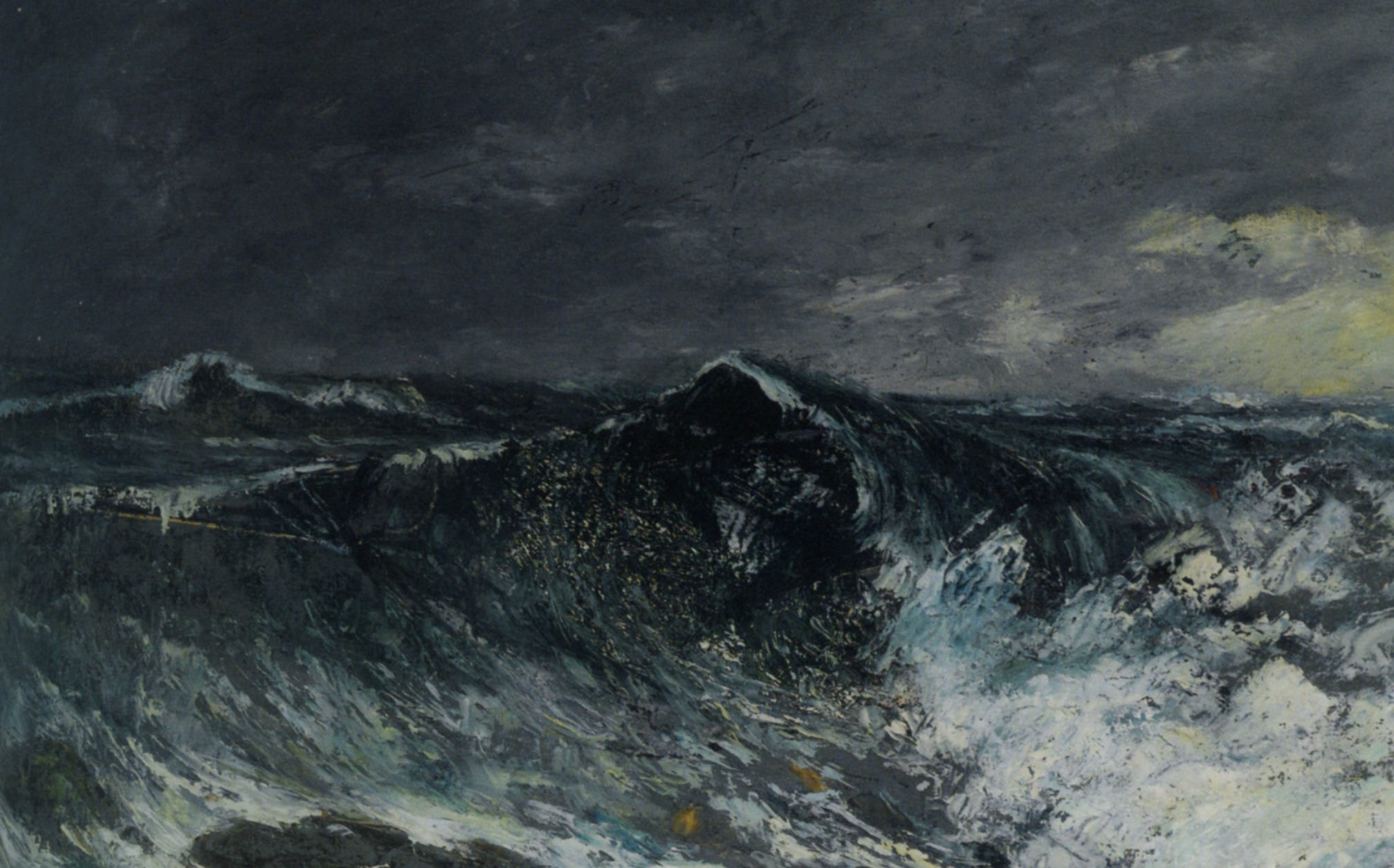
This is the real exteriority of the absolute outside: the reality of the absolutely unconditioned absolute outside univocally predicated of the dark: the light univocally predicated of the darkness: the shining of the light univocally predicated of the limit of the darkness: actuality univocally predicated of the other of self-identity: existence univocally predicated of the absolutely unconditioned other of the self. The precision of the shining of the light breaking the dark is the other-identity of the light.
Obviously tastes differ, but I would suggest that this is not, in fact, any kind of bad writing at all. It’s dense and utterly obscure, and very possibly doesn’t mean anything at all, but it’s magnificent. The slow cadence of all those monstrous words, rolling and roiling in the wide murky thickness of their sentence. I’ve reread this passage several times, and every time it generates a sudden mental image of whales, huge humpback whales on a black moonless night, glittered with barnacles, wheeling their great ungainly heads just beneath the frothy surface of a white-webbed sea.
According to a lot of people, this is not important. Summoning beautiful mental images of whales is not one of the proper functions of philosophical language. I want to argue that a lot of people are wrong.
Naturally, I’m going to argue this in a deeply annoying way. Instead of straightforwardly saying why I think philosophical language should encompass this kind of seemingly nonphilosophical function, I’m going to start by asking why other people think it shouldn’t. I’ve sketched out a vague theory of why people keep obsessively defending Judith Butler’s terrible sentence, but why do people feel the need to keep obsessively attacking it, twenty-seven years later? What’s ultimately at stake here?
Allegedly, the stakes are that we’re in the middle of a life-or-death struggle between the two kinds of philosophy in the world, which are analytic and continental. Analytic philosophy is grounded in a scientific understanding of the world, and it values precision, clarity, and accuracy in all its sincere efforts to arrive at the truth through reasoned argument. Continental philosophy, meanwhile, is a patchwork of screaming hysterical personality cults, all of them clamouring that equations are sexist and measurement is colonialism, or making arguments that depend entirely on German puns, or saying things that genuinely make no sense at all, justifying these and various other insanities with the vague sense that everything is made of language and nothing is really real.
Peer closely at this picture, though, and a few troubling things emerge. The first is that continental philosophy doesn’t exist. No philosopher has ever identified themselves as belonging to any such tradition. There is no canon. There is no unified set of concerns. It is a term used exclusively by Anglophone philosophers to describe anything that doesn’t match their preferred style. Once, the targets were usually French, but these days the main object of derision is one particular sentence by Judith Butler, who is an American; the only continent on which anything called continentalism exists is North America. What gets called continental philosophy is also, strikingly, not philosophy. Critics sometimes lob a few darts at Hegel and Heidegger, but their main object is almost always poststructuralist social theory. (Nobody seems to have a pop at Nietzsche, even though he was arguably a far bigger influence on French theory than Hegel, and he didn’t exactly write in numbered propositions. It would ruin the argument; his prose is too good.) Social theory is, in fact, deeply informed by science. If you read any of this stuff you’re vanishingly unlikely to come across anything that has even the slightest whiff of classical metaphysics. Instead, you’ll find a whole lot of material based in anthropology, sociology, history, psychology, economics, and linguistics. Social theorists are not remotely interested in questions like whether we have free will, or whether we simply experience ourselves moving through an existing block of time; they’re interested in the ways that notions of freedom and eternity have historically been used to shore up or contest various forms of social power. You don’t have to like this approach, but in its humble empiricism it’s a lot closer to actual science than the stuff a lot of its critics get up to.
All of this might sound like pedantry, but it’s interesting that the critics, who usually make such a big deal about the importance of clarity and precision and the correct delineation of objects in thought, are willing to be so sloppy in this one particular case. Something’s up here. Some game of doubling and reversal, imitating the enemy. If the more empirical, scientific side is actually the continentalists, could it be that the ones playing ultimately meaningless games with language are actually the analytics?
In China, the great founding dynasts would occasionally boast that they had achieved the rectification of names. By assiduously performing the Feng and Shang sacrifices, making appointments by merit, and promoting right action throughout all the lands under heaven, they could supernaturally alter the structure of linguistics so words and things perfectly coincide. There is an entropy that tears the characters away from the objects they describe, but a good Emperor can return the Chinese language to the state that, in Western thought, belongs to the divine language with which Adam named all the animals in the Garden of Eden. This is, broadly speaking, the project of analytic philosophy.
The field begins in the late nineteenth century with Gottlob Frege and his project to build a Begriffsschrift or concept-writing, a perfect system of logical notation that would allow the full expression of logical structure. For Frege, thought is objective and necessarily expresses truth-values; the problem is that ordinary natural language is too ambiguous to properly represent it. The history of philosophy is the history of various clever people being hopelessly undone by the vague and woolly language they were saddled with; Frege would provide a new, clear basis for mathematics and logic. His language consisted of branching vertical and horizontal lines to indicate propositions and logical dependencies. The system seemed to work until the turn of the twentieth century, when Bertrand Russell noted a paradox: what about the set of all sets that do not contain themselves? Either it does contain itself, in which case it doesn’t, or it doesn’t, in which case it does. This genre of paradox had been known since antiquity, but for Frege it was a catastrophe: his perfect language had somehow managed to reproduce the exact same inconsistencies as the half-barbarous goat-herding Greek spoken by Epimenides two and a half thousand years ago.
From there, the history of analytic philosophy is the history of successive attempts to build an internally consistent logical language that could perfectly express reality, all of which kept mysteriously failing. Russell tried to patch up the damage caused by his own paradox with a new language based on types, which were sorted into a rigid hierarchy, in which each could only contain elements from lower down the chain. The result was an almost impossibly unwieldy system that, notoriously, took 362 pages to derive enough arithmetic to prove that one plus one equals two. It stood, mostly as a monument to its own mad ambition, until Gödel knocked out the foundations in 1931. Wittgenstein began with the notion that the world consists of facts that share a form with the propositions that describe them; by the end of the Tractatus, after a series of increasingly frantic diagrams, he’s in a fully mystical register. By trying to describe the structure of his formal language he’s had to describe its limits, which means using it to go beyond the point at which it can describe anything at all. ‘He who understands my propositions finally understands them as senseless.’ Rudolf Carnap was less into this sort of angsty koanmongering; he believed that anything that couldn’t be expressed in his logical syntax—which included all of metaphysics—was essentially meaningless, just unverifiable mouth noises masquerading as language. Since everything internal to his framework would make perfect sense, he had effectively eliminated a whole host of philosophical pseudo-problems. Unfortunately, his system was based on the idea that all truths can ultimately be supported by analytic propositions, and in 1951 Willard Van Orman Quine showed that the analytic-synthetic distinction is actually untenable, since every known way of defining an analytic proposition assumes that you already know what an analytic proposition is. The structure is incapable of accounting for itself. That was the end, more or less, of the grand logical systems.
Analytic philosophy was supposed to provide a way to precisely express reality through language; in the process it seemed to end up demonstrating that this kind of totally lucid language might actually be impossible. There is no language without some kind of circularity, or self-reference, or radical contingency; everything we say is in some important sense inexplicable. So philosophers turned to thinking about language in different and less grandiose ways. As a social game, or as a series of acts. Finally, Saul Kripke gave everyone permission to start doing metaphysics again and the entire analytic project essentially dissolved. There’s not really any such thing as analytic philosophy any more; the term still gets used, but it just refers to a particular kind of no-nonsense writing style. Nobody is still upholding the principles of logical atomism; they’re having a much better time working on modal realism and philosophy of mind and simulation theory. They’re getting paid by Google to devise scenarios in which it’s totally ethical for a self-driving car to mow down an entire crèche worth of angelic toddlers. The only remnant of the grand analytic experiment is the vague sense that it would be nice if language could clearly account for reality, and it’s virtuous to keep on pretending as much as possible that it can, even though it can’t. But there is also a ritual. Every so often, the survivors from the shipwreck of analytic philosophy all gather round to shriek at Judith Butler’s terrible, terrible sentence. Sure, all our attempts to clearly express the world in language ended in failure—but get a load of these guys! It’s like they’re not even trying.
What I think these people are missing is that the continental philosophy they’re obliged to make a big show out of disdaining is, in fact, nothing more or less than the direct successor of the noble but doomed analytic project. It picks up pretty much exactly where analytic philosophy leaves off. It’s still possible to establish facts in an ordinary, empirical, common-sense way, but philosophers hold themselves to a higher standard, and it looks like there’s no representational system with any necessary relation to the world. Instead, the languages we’re saddled with seem to have some entirely other purpose. Maybe the function of language isn’t to represent things, but to do things. The poststructuralists get here by a slightly different route—JL Austin is an influence, but so is Saussurean semiology, Nietzschean anti-foundationalism, plus Marx’s line about how the philosophers have only described the world when the point is to change it—but their concerns are strangely convergent with those of Anglophone philosophy after Quine. There’s surprisingly little daylight between différance and referential indeterminacy. If they express themselves in a drastically different style, it’s because they’re acutely aware that language itself is in play. Once you’ve established that language is not a perfectly transparent vehicle for the neutral description of facts, you can’t then attempt to just neutrally describe that situation. (If you think that’s what I’m doing here, you’ve failed to pick up on the multiple esoteric meanings hidden in this essay. Go back up to the top and start again.) You have to engage with the system of words on their own terms.
So: language has betrayed us. Now what? What can language do, besides simulate reality? There are the various perlocutionary acts, persuading, forbidding, seducing, offending, and so on. Language mediates social games and forms the structure of subjectivity. It throws up its own internal problems that can be solved or expanded for fun and profit. It has a shibboleth function, which allows you to distinguish between friend and enemy based on whether they use words like hegemony or not. Some of these intersubjective functions are not always particularly positive, and definitely not useful to philosophy. But others are. We can still use language to access objective reality, as long as we’re prepared to let it take a more active role than straightforward description. Language, and especially philosophical language, changes how the world discloses itself to us.
Disclosure is Heidegger’s term; his famous example is the river Rhine, which is disclosed in one way through the soppy Romantic poetry of Hölderlin—‘wo aber geheim noch manches entschieden zu Menschen gelanget’—and in an entirely different way through the enframing powers of the technological view of the world, which works to ‘to reveal the real, in the mode of ordering, as standing-reserve,’ until it becomes possible to dam up the river where Hölderlin thought God might suddenly appear with a big hydroelectric plant. Heidegger was, notoriously, a bit of a reactionary. You do not have to agree with his views on green energy to find something useful here. Philosophy allows the world, which is large, to appear to us in new and surprising ways. Heraclitus disclosed a world made of fire and flux; Parmenides disclosed a world in stasis; neither of them were, strictly speaking, wrong, in the same way that the logical atomists were not entirely wrong when they said that the world is a collection of facts.
I think the most compelling version of this idea is the one put forward by Deleuze and Guattari in What is Philosophy?, in which they outline an understanding of philosophy that is not structured around arguments but concepts. The concept is a word that gives form to the general chaos of thought, without losing the infinitude that makes thought valuable to begin with. It is, before everything, an event in language. ‘Some concepts must be indicated by an extraordinary and sometimes even barbarous or shocking word; others make do with an ordinary, everyday word that is filled with harmonics so distant that it risks being imperceptible to a nonphilosophical ear. Some concepts call for archaisms, and others for neologisms, shot through with crazy etymological exercises: etymology is like a specifically philosophical athleticism. In each case there must be a strange necessity for these words and for their choice, like an element of style.’ But each concept only comes once, and it comes attached to a proper name. ‘Aristotle’s substance, Descartes’s cogito, Leibniz’s monad, Kant’s condition, Schelling’s power, Bergson’s duration.’ The point is not to get too wrapped up in any of these. You don’t judge a concept by whether it’s true or false, but by what can be done with it.
I think this is where a lot of critics come unstuck; they’re still clinging to the purely denotative function of language, even though their own philosophical tradition has largely discarded it. In his initial critique, for instance, Adelstein notes a lot of things that ‘continental’ philosophers do that he finds annoying. They will, for instance, make incredibly bold claims and then fail to back them up with any evidence whatsoever. The typical form of this argument is ‘brazenly asserting “A is not B,” (where B is the obvious thing everyone would expect it to be) “but instead C” where C is some random thing that makes no sense.’ Or, when they do need to support their insane assertions, they’ll do so purely by citation. This is ‘another bogus continental philosophy rule of inference: saying “for A, B” and then acting like you’ve established B.’
And people really do this. If you’ve been reading my stuff for a while, you’ll know that about a decade ago I had a bad habit of punctuating my writing with constant references to the Standard Repertoire of Frenchmen. The SRF consists of Derrida, Foucault, Lacan, Deleuze, and Baudrillard (there are also some optional add-ons, plus a Standard Repertoire of Frenchwomen if you want), and you keep them in your pocket at all times like a deck of Pokémon cards. The game was simple: to demonstrate that you had a deep theoretical understanding of what was happening in the world, you had to relate absolutely everything—Miley Cyrus twerking at the 2013 VMAs, massacres in the suffering countries far away—to some concept from one of the SRFs. Twerking as Event that inaugurates a new regime of truth. War as a rhizomatic assemblage. To be honest, anything could be a rhizomatic assemblage. (Meanwhile, looming vaster in the background, there’s the Standard Repetoire of Germans, which consists of Hegel, Marx, Nietzsche, Freud, and Adorno. You treat the SRG much more reverentially than the SRF. These are not toys.) I like to think I did this with a bit of ironic panache, but not everyone can. There’s a whole class of academic writer that seems to have turned citation into a genuine mental illness. People so terrified of risking an original thought that they’ll put practically every word they write in quotation marks. They don’t walk to the shops, they traverse what Lefebvre calls ‘lived space’ to engage in the market activity that, as Foucault argues, has become a ‘site of veridiction.’
And this is absolutely a very annoying way to write. It’s just that when we quote the assertion of some soap-dodging wine-swilling snail-eating marinière-wearing little Gaul that P, some of us, at least, are not assuming that P has been established as a permanent fact about the world. We’re asking how the world would look if P, what you might notice that you hadn’t noticed before, what new and interesting approaches might unconceal themselves if we chose to see things P-ishly and not otherwise.
Still, I don’t play that game so much any more. There are a lot of ways for it to go wrong. You might get tangled in various status games or exercises in political grandstanding. You might suffocate as all your concepts ossify into dogmas around you. Or you could forget that the only criterion of good philosophy is whether it makes the world more interesting, and end up like Judith Butler, self-seriously spooling out reams of greyish text in which there’s nothing new or surprising at all. I still find some of the SRFs useful, but these days I tend to think of my theorybro era as a kind of tutelage in generating thoughts; eventually you have to take the stabilisers off your bike and see if you can stay up all by yourself. A lot of people never make it that far, and a lot of theoretical discourse is vaguely disappointing. This is probably for the best. If there were too many really interesting writers out there it would be impossible to get anything done.
For what it’s worth, though, I really do think that the great villains of awful continentalist writing were actually capable of writing extremely well. The Fred Jameson line that won the bad writing award in 1997, for instance, on how ‘the visual is essentially pornographic’: you’re mad if you don’t think that’s good. Derrida could talk a lot of guff, and now I’m a decade out of the academy I’m not sure I agree with him that the most interesting thing about a Kafka story is the page numbers, but he could pack heat when he needed to. The sinister prophecy at the end of Structure, Sign, and Play, where he proclaims the new discipline of poststructuralism ‘with a glance toward those who, in a society from which I do not exclude myself, turn their eyes away when faced by the as yet unnamable which is proclaiming itself and which can do so, as is necessary whenever a birth is in the offing, only under the species of the nonspecies, in the formless, mute, infant, and terrifying form of monstrosity.’ However much you might hate Derrida, he said it first, and he said it better. He’s great any time he gets a chance to talk about ancient Egypt, or geology, or ghosts. Or in Aphorism Countertime: ‘Survival and death are at work, in other words the moon.’ Fantastic line. Stop worrying about what it means; just think about it next time you see that chilly face looking down on you at night, and see what it does.
Anyway, I don’t know how much any of this will convince anyone still living in the world according to Gottlob Frege, which exists only so its constituent atoms can be cleanly replicated in thought. In a way I suppose I don’t really want it to; I’m not here to rob anyone of their concepts. All I can say is that it strikes me as very obvious that Heraclitus and Philip K Dick were right: when God created the world, he did so as a kind of play, in the way a child plays. Evil and suffering exist because God is an innocent, and there’s more joy in the wide infinity of imperfect forms than there would be in remaining as a single perfect circle. God put thoughts in our head for the same reason he put whales in the ocean: because they’re big and because they’re absurd and because he wanted to see them leap, and because they are, in ways we can’t understand but might sometimes glimpse, just for a moment, two instances of the same thing.